My Roop Kund Trek Experience
There’s something haunting and beautiful about Roop Kund that drew me to the Himalayas. The mystery of 500+ human skeletons discovered around 1942 by a forest ranger, the spectacular view of Trishul towering at 7120m, and the promise of 4 days of hard trekking through the mountains — it all called out to me. This trek is perfect for experienced and intermediate trekkers like myself who seek both adventure and mystery. The lake lies on the ancient route to the Nanda Devi Raj Ghat festival, celebrated once in 12 years, and it’s believed those souls perished in a terrible hailstorm on their pilgrimage. Standing there, I felt connected to that history in ways I can’t quite explain.
My Trek Highlights
The mystery of the skeletons captivated me from the moment I first heard about Roop Kund. Knowing that I was walking the same path where hundreds met their fate centuries ago sent shivers down my spine — in the best way possible. The view of Trishul at 7120m was absolutely breathtaking, standing guard over the mysterious lake like a silent witness to history.
The four days of hard trekking tested my limits, but every step was worth it. I learned that beyond Roop Kund lies Homkund, which becomes even more difficult as the height increases. If I return for that route, I’ll need to pack proper climbing gear — sleeping bag, tents, and warm clothes become essential at those altitudes.
How I Reached Lohjung
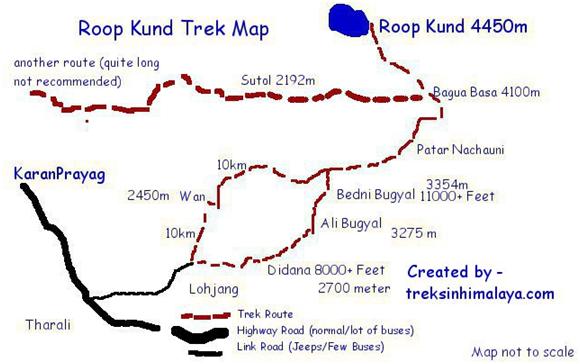
My starting point was Lohjung, a small town nestled in the Shivalik range of the Himalaya. Getting there was an adventure in itself, and I learned to embrace the journey as much as the destination. Here’s the route I followed:
Delhi to Rishikesh via Bus — I made sure to reach Rishikesh early morning, giving myself time to prepare for the next leg.
Rishikesh to KaranPrayag via Bus — The buses heading to Joshimath and Badrinath pass through KaranPrayag, making it convenient to catch a ride.
KaranPrayag to Tharali — Here, I grabbed whatever transport was available — bus or jeep, it didn’t matter.
Tharali to Lohjung — Most of the time, I found that jeeps were available for this final stretch.
From Lohjung, I discovered there are two ways to reach Bedni Bugyal (Bugyal means grassland in the mountains, and what stunning grasslands they are!). One route goes via Wan, and the other via Dedina. I took the Wan route going up and returned via Dedina.
My Day-by-Day Trek Itinerary
Day 1 — Lohjung to Wan
I started early morning, eager to begin my journey to Wan.
-
Distance: Around 13 km
-
Difficulty: Being the initial part of the trek, I found this relatively easy to cover
-
Highlight: The beautiful view of the Himalaya was spectacular — I made sure not to forget capturing these moments
-
Accommodation: GMVN guest house at Wan (I booked mine through http://www.gmvnl.com/newgmvn/touristbunglows/index.aspx)
The first day set a gentle pace, allowing my body to adjust to the terrain and altitude. By evening, I was settled at Wan, already feeling the mountains working their magic on me.
Day 2 — Wan to Bedni Bugyal
This was the day I truly felt the trek beginning.
-
Distance: Around 12 km
-
Altitude: Height slowly reached 11000+ feet
-
Route: I passed through Gharoli Patal on the way
-
Challenge: The trek started becoming tougher as I gained elevation
-
Attraction: Bedni has a small Kund that I visited that evening itself, knowing the next day’s trek would be even tougher
The climb to 11000+ feet was where I felt my lungs working harder, but the sight of Bedni Bugyal spreading before me was worth every labored breath.
Day 3 — Bedni to Bagua Basa
Today the real challenge began.
-
Distance: About 9 km
-
Altitude: 14000+ feet at Bagua Basa
-
Terrain: The path became noticeably steeper
-
Time: Despite the shorter distance, it took considerable time due to the elevation gain
-
Evening Activity: I went for an acclimatization walk to help my body adjust to the height
This was crucial — I learned that respecting the altitude is as important as having the stamina to trek.
Day 4 — Roop Kund Day!
This was the day I’d been waiting for.
-
Destination: Roop Kund at around 16500 feet
-
Base: I stayed at Bagua Basa (this is recommended rather than camping higher)
-
Distance: Around 10 km total
-
Schedule: I started early in the morning and spent time at the Kund, making sure to return to Bagua Basa by evening
Standing at the edge of Roop Kund, surrounded by those ancient skeletal remains, with Trishul watching over us — it was a moment of profound silence and reflection. The thin air at 16500 feet made every movement deliberate, every breath precious.
Day 5 — Back to Ali Bugyal
The descent began, and I felt the difference immediately.
-
Route: Trek back to Ali Bugyal
-
Experience: The trek became easier as height started decreasing
-
Advantage: The lower altitude helped me gain some speed
-
Caution: I remained careful — sharp turns and sudden downfalls can easily lead to injuries, and I wasn’t about to let carelessness ruin my trek
My legs felt stronger going down, but I kept reminding myself that most trekking accidents happen during descent.
Day 6 — Ali Bugyal to Lohjung via Dedina
The final day was long but satisfying.
-
Route: Following the other way back to Lohjung, passing through the small village of Dedina
-
Distance: Around 21 km — the longest day of trekking
-
Timing: I started early in the morning to avoid getting stuck in the dark
-
Strategy: Pacing myself was key to completing this marathon final day
Covering 21 km tested my endurance one last time, but reaching Lohjung felt like completing a pilgrimage of my own.
Tips from My Experience
Let me share some practical wisdom I gathered along the way:
Start Early: On multiple days, especially Day 1, Day 4, and Day 6, starting early made all the difference. The mornings are fresher, and you avoid running out of daylight.
Respect the Altitude: That acclimatization walk on Day 3 at Bagua Basa wasn’t optional for me — it was essential. Don’t skip it.
Visit Attractions Early: I made sure to visit the small Kund at Bedni on Day 2 itself, knowing Day 3 would be tougher. Plan ahead.
Stay at Bagua Basa on Roop Kund Day: Rather than camping higher, staying at Bagua Basa and doing a day trip to Roop Kund was the smart choice. The comfort of a base camp at 14000+ feet made the 16500-foot push manageable.
Watch Your Step on Descent: The trek gets easier coming down, but that’s when injuries happen. Those sharp turns and sudden drops demand respect and attention.
Book Accommodation in Advance: The GMVN guest house at Wan needs booking, so plan ahead through their website.
Consider the Homkund Extension: If you’re thinking of going further to Homkund like I was tempted to, remember it requires proper climbing gear — sleeping bags, tents, and seriously warm clothes.
Time Your Trek Right: The 21 km stretch on Day 6 is no joke. Leave early or you’ll find yourself stumbling in the dark.
Come, Experience the Mystery
If you’re reading this over chai and wondering whether Roop Kund is calling your name — listen to that call. The mystery of 500+ skeletons, the majesty of Trishul at 7120m, the challenge of trekking to 16500 feet, and the beauty of the Himalayan bugyals await you. This trek demands experience and intermediate-level fitness, but it rewards you with memories and moments that stay with you forever.
The mountains are waiting, and so is the mystery of Roop Kund. Will you answer the call?